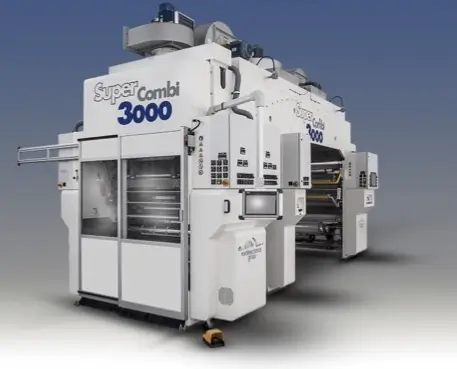

In today’s rapidly growing packaging and printing industry, manufacturers require machines that offer flexibility, high performance, and cost efficiency in a single system. As product demands increase and materials become more complex, traditional lamination methods are often not enough. This is where the combi lamination machine plays a vital role.
A combi lamination machine is a hybrid system that combines different lamination technologies into one advanced setup. It is widely used in flexible packaging, food packaging, pharmaceutical packaging, and industrial production where multiple lamination processes are required in a single workflow.
What is a Combi Lamination Machine?
A combi lamination machine is an advanced industrial machine designed to perform multiple types of lamination processes in one integrated system. It typically combines solvent-based, solventless, and sometimes water-based lamination technologies depending on production needs.
This hybrid structure allows manufacturers to process different materials and adhesives without changing machines, making production more flexible and efficient.
Combi lamination machines are commonly used in large-scale packaging industries where versatility and high output are essential.
Importance of Combi Lamination Machine in Modern Industry
The modern packaging industry demands machines that can handle diverse materials and complex structures. A combi lamination machine fulfills this requirement by offering multi-process capability in a single system.
Key importance factors include:
- Ability to handle multiple lamination methods
- High flexibility for different packaging materials
- Reduced need for multiple machines
- Improved production efficiency
- Cost-effective long-term operation
- Suitable for complex packaging structures
These advantages make it a valuable investment for advanced manufacturing units.
Working Process of Combi Lamination Machine
The working mechanism of a combi lamination machine depends on the selected lamination method. However, the general process is highly automated and efficient.
Material Feeding
Different substrates such as plastic films, aluminum foil, or paper are loaded into the system.
Process Selection
Operators select the required lamination method (solventless, solvent-based, or hybrid) through a digital control panel.
Adhesive Application
Depending on the process, adhesive is applied using coating rollers or extrusion systems.
Layer Bonding
Materials are combined under controlled pressure and temperature using high-precision rollers.
Curing and Drying
The laminated structure is stabilized to ensure strong bonding and durability.
Final Output
The finished laminated material is collected in roll form for further processing.
This integrated process improves production speed and flexibility.
Key Features of Combi Lamination Machine
Modern combi lamination machines are designed with advanced technologies that enhance productivity and performance.
Multi-Process Capability
Supports different lamination methods in a single machine.
High-Speed Operation
Suitable for continuous industrial production.
Digital Control System
Allows precise adjustment of speed, pressure, and adhesive flow.
Servo Motor Technology
Ensures smooth and stable machine performance.
Advanced Drying System
Provides quick curing for solvent-based processes.
Energy Efficient Design
Reduces power consumption while maintaining high output.
Types of Combi Lamination Machines
Different models of combi lamination machines are available depending on production requirements.
Solvent + Solventless Combi Laminators
Combine both adhesive systems for maximum flexibility.
Water-Based Combi Laminators
Use eco-friendly adhesives suitable for sustainable packaging.
Multi-Layer Industrial Combi Systems
Designed for complex packaging structures with multiple layers.
High-Speed Automatic Combi Machines
Fully automated systems for large-scale production.
Custom Hybrid Laminators
Designed according to specific industrial requirements.
Each type serves different manufacturing needs.
Applications of Combi Lamination Machine
Combi lamination machines are widely used across multiple industries due to their versatility.
Food Packaging Industry
Used for snacks, beverages, frozen food, and ready-to-eat packaging.
Pharmaceutical Industry
Ensures hygienic and safe packaging for medical products.
Flexible Packaging Industry
Used for pouches, sachets, and multi-layer films.
Cosmetic Industry
Used for creams, lotions, and personal care packaging.
Industrial Packaging
Used for chemicals, fertilizers, and heavy-duty packaging materials.
This wide range of applications makes it a highly valuable industrial machine.
Advantages of Combi Lamination Machine
Businesses using combi lamination machines gain multiple operational benefits.
Maximum Flexibility
Supports different lamination processes in one machine.
Reduced Equipment Cost
Eliminates the need for multiple machines.
High Production Efficiency
Improves workflow and reduces downtime.
Consistent Quality Output
Ensures uniform lamination results across all materials.
Cost-Effective Operation
Reduces labor and maintenance costs.
Space Saving Design
Combines multiple systems into one compact unit.
See also: How advanced scanning tech is simplifying airport security
Technological Innovations in Combi Lamination Machines
Modern combi lamination machines are equipped with advanced technologies for better performance.
Key innovations include:
- PLC-based automation systems
- Smart adhesive control technology
- IoT-enabled monitoring systems
- Touchscreen control panels
- Automatic tension adjustment
- Real-time quality inspection systems
These features improve precision and productivity.
Role in Modern Packaging Industry
The combi lamination machine plays an important role in modern packaging production by offering flexibility and efficiency. As packaging requirements become more complex, manufacturers need machines that can handle multiple processes without delays.
It helps industries achieve:
- Faster production cycles
- Higher packaging quality
- Better operational flexibility
- Improved product consistency
This makes it a key component in advanced manufacturing systems.
Environmental Considerations
Modern combi lamination machines are designed with sustainability in mind.
Eco-friendly benefits include:
- Reduced material waste
- Energy-efficient operation
- Support for eco-friendly adhesives
- Lower emissions in modern systems
- Optimized resource usage
These features help industries meet environmental standards.
Challenges of Combi Lamination Machine
Despite its advantages, there are some challenges:
- High initial investment cost
- Complex machine operation
- Need for skilled technicians
- Regular maintenance requirements
However, long-term flexibility and efficiency make it a valuable investment.
Future of Combi Lamination Machine
The future of combi lamination machines is focused on automation and smart manufacturing systems.
Future developments may include:
- AI-based production optimization
- Fully automated hybrid systems
- Advanced eco-friendly adhesive technologies
- Real-time cloud monitoring
- Faster multi-process integration
These innovations will further enhance productivity and efficiency.
Conclusion
The combi lamination machine is a powerful and flexible solution for modern packaging industries. It integrates multiple lamination technologies into one system, allowing manufacturers to achieve high efficiency, cost savings, and superior product quality.
With continuous technological advancements and growing demand for versatile packaging solutions, combi lamination machines will remain an essential part of global industrial production.