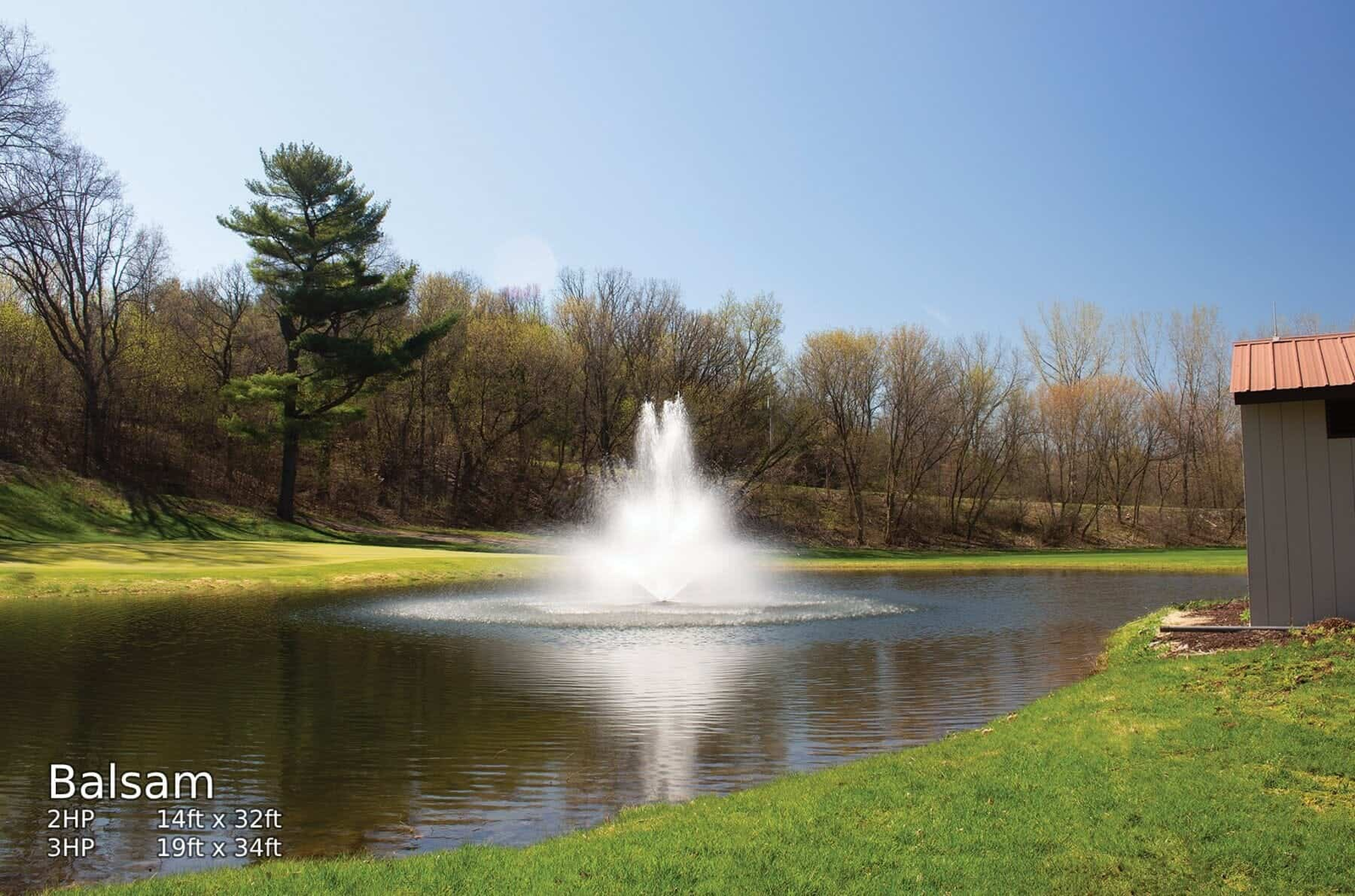

Large pond fountains can turn a flat, still pond into the best view on your property. The sound they make is harder to judge from a photo, though. You might picture a soft background hush while you eat dinner on the patio. Or you might worry that a tall jet will be loud enough to hear through the bedroom window at midnight. Both outcomes are possible, and the gap between them mostly comes down to choices you make before and after the unit goes in.
So how loud are large pond fountains, really? Spec sheets tend to list horsepower, amps, and spray size instead of a decibel rating. That makes sense since the sound shifts with the pattern, the wind, and where you happen to stand. A better approach is to look at what creates the noise and adjust those pieces one at a time.
What Makes Large Pond Fountains Loud?
Here is why two fountains with similar motors can sound so different. On a floating unit, the motor sits below the surface, so you mostly hear water falling back onto the pond. Acoustic researchers link fountain sound to flow rate, the height of the falling water, the surface it hits, and the number of jets.
- Flow rate plays a role, since more gallons per hour (GPH) through the nozzle means more water striking the surface every second.
- Fall height adds to it, and lab tests showed sound levels climbing clearly as water dropped from greater heights.
- Splitting the same flow into several streams raised sound levels by about 2 to 3 dB in those same tests.
- Water hitting hard materials produced more high-pitched sound than water landing on water.
That last point matters more than it seems. If wind pushes spray onto a dock, a rock edge, or a retaining wall, the sound can turn sharper. Listeners in one study tended to prefer water sounds with less of that sharp, hissy edge.
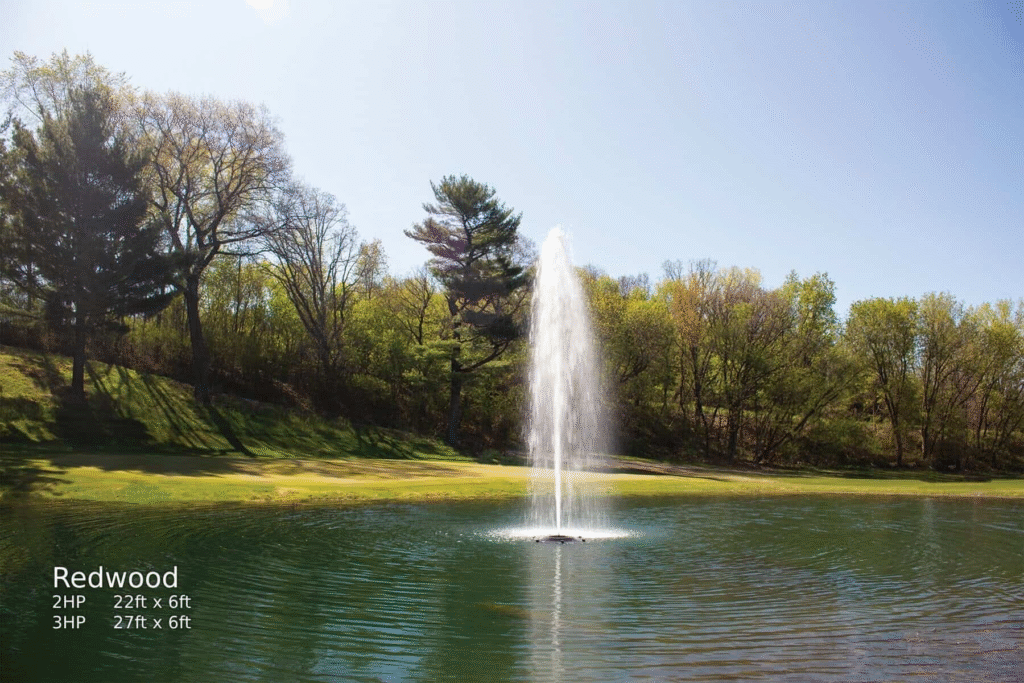
How Distance Changes the Sound of Large Pond Fountains
For a single sound source, levels drop by roughly 6 dB each time the distance doubles. A fountain that sounds busy from 25 feet away should be about 6 dB softer at 50 feet and about 12 dB softer at 100 feet.
Of course, a real pond is not a lab. Water is a hard surface that reflects sound so that splash noise can travel across open water with little softening. A neighbor directly across the pond may hear more than you expect.
It helps to keep a couple of everyday reference points in mind. A whisper runs about 30 dB, while normal conversation sits near 60 dB. Where do you want the splash to fall on that scale when you are sitting on the patio?
See also: Balancing Technology and Human Life
When Splash Noise From Large Pond Fountains Works in Your Favor
Is all fountain noise a problem? The answer depends on what else you hear in your yard. One study found water sounds worked best over traffic when they matched its level or sat no more than 3 dB below. The same research found listeners preferred fountain sounds to waterfall sounds.
A fountain that feels a little loud on a calm Sunday may feel right on a noisy weekday evening. Then again, that same level could bother a neighbor with no road noise to cover. Sound is personal, and one setting rarely suits everyone.
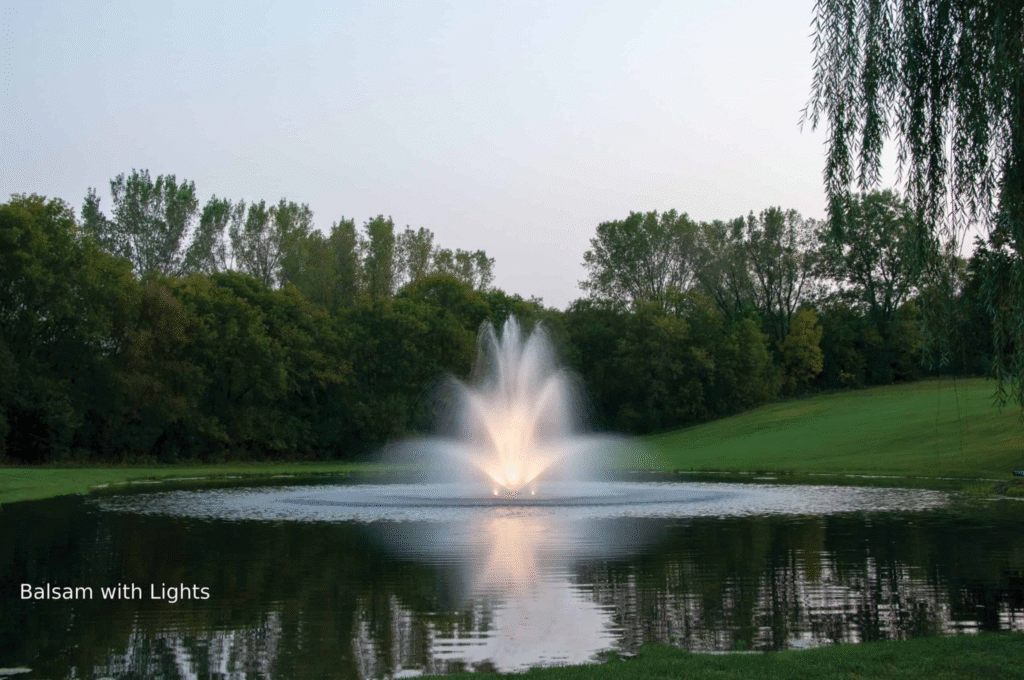
Choosing Spray Patterns for Quieter Large Pond Fountains
Pattern choice gives you a lot of control. Some multi-pattern fountains ship with five interchangeable nozzles. On one 3/4 HP model, the tallest standard pattern reaches about 13 feet, while the lowest sits near 6.5 feet. The lower pattern will likely sound softer, since the water has less distance to fall.
Aerating fountains deserve a closer look too. Some high-flow aerating units throw water in a low, wide V shape. The spray stays low, yet the heavy flow may still create a steady, frothy sound. If oxygen is your main goal, browse the aerating fountains with that trade-off in mind.
Unit size is worth checking, too. A motor far larger than your pond needs moves extra water, and extra flow means extra sound. The good news is that lab tests showed sound rising more slowly than flow. Even so, the pond pump size calculator can help you avoid oversizing from the start.
Planning a Quieter Large Pond Fountain Setup
Before you buy, stand where you plan to sit and ask yourself three questions. How far is your seating area from the spot where the fountain will float? What hard surfaces sit close to the spray? Does anyone nearby sleep with the windows open?
Your answers will point you toward a pattern height, a unit size, and a run schedule. When you are ready to compare spray heights side by side, start with the full range of pond fountains.