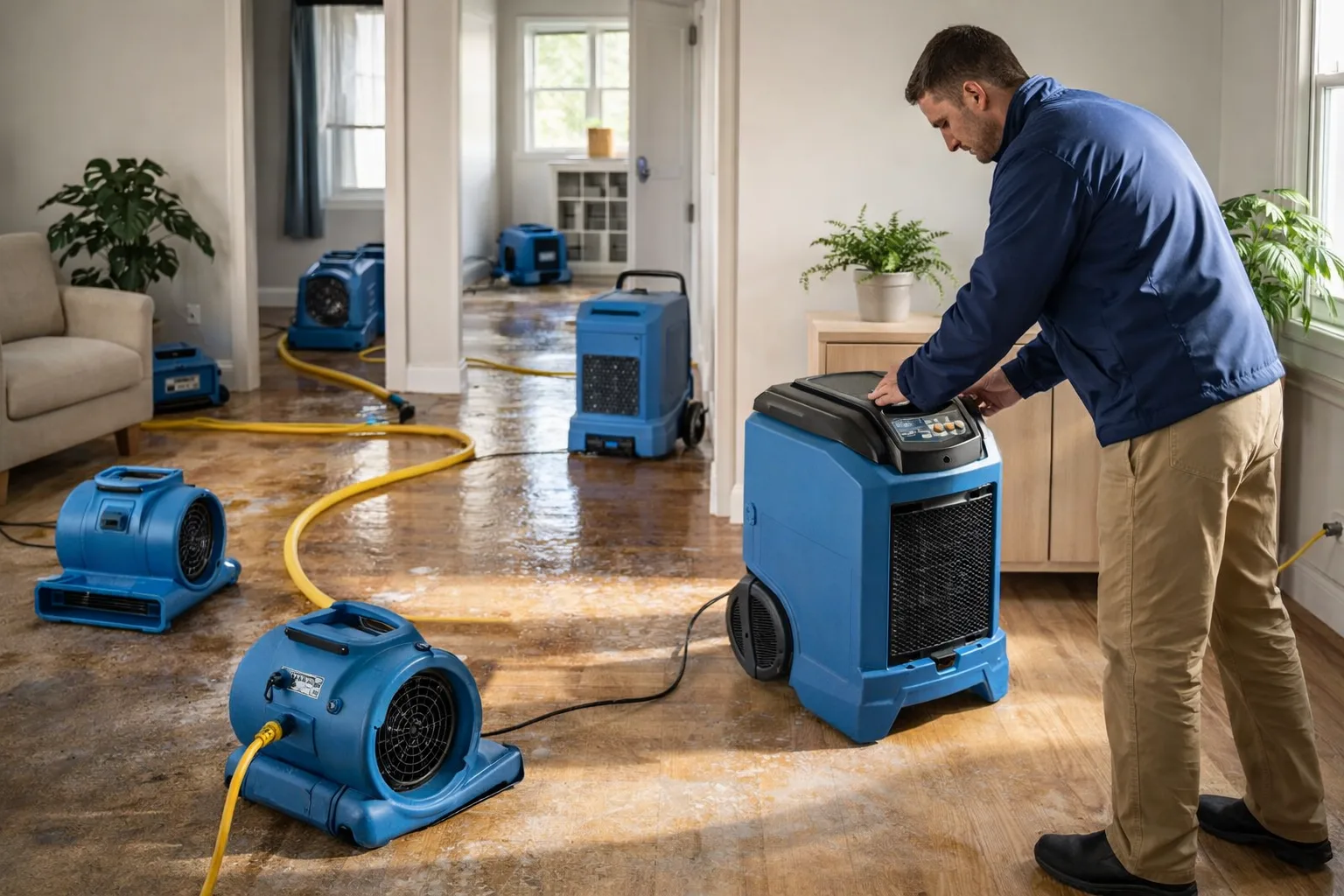

A supply line under the kitchen sink fails overnight, and by morning a thin layer of water covers the floor. You mop up what you can and aim a box fan at the tile, then head off to work. It’s very dry outside, and the forecast shows another sunny week ahead. Surely the house will dry up and will be fine by Thursday? Plenty of people along the Front Range assume exactly that, and they’re only half right.
Surface water leaves fast in a dry climate. What stays behind is harder to spot. Think of the carpet pad, for one, or the studs sitting behind your baseboards. Before a water damage company picks a drying method, it takes meter readings in those spots. Skip that step and a room can look done while the inside of the wall stays wet.
Then there is the smell. Why does the room still smell musty a week on, when the floor seems dry? Ask a drying technician from Restoration Logistics in Denver, and you’ll probably hear the same answer. The odor usually comes from moisture the room air never touches.
Water Damage Drying Depends on More Than Room Air
Start with relative humidity. It compares the water vapor in the air with the most that air could carry at its temperature. Colorado humidity often runs low, so exposed surfaces dry quickly. Inside a closed wall, it’s different. The air there hardly moves, and it can stay damp for days.
Wood and drywall paper change slowly. They soak up water slowly, and they let it go slowly too. Every material drifts toward its equilibrium moisture content, the level where it neither gains nor loses water to the nearby air. According to Penn State Extension, wood keeps shifting until it hits that balance. With paint and trim sealing the cavity, soaked framing may take longer than you’d expect to dry. A stud may still read wet several days after the drywall face feels dry again.
Moisture tends to hide in these spots after a leak:
- The bottom edge of drywall, which wicks water upward
- Carpet pad and the tack strip along the walls
- Subfloor under vinyl plank or tile
- Insulation inside exterior walls
- The space behind cabinet toe kicks
See also: Balancing Technology and Human Life
How Quickly Mold Can Follow Water Damage
Per the U.S. Environmental Protection Agency, you should dry water-damaged areas and items within 24 to 48 hours to prevent mold growth. A dry climate doesn’t extend that timeline for materials that stay wet inside a wall. A damp surface is all mold needs, and the space behind a baseboard can stay damp in rooms that feel perfectly fine.
How do you know the hidden spots are dry? You measure them with a meter. Guessing by feel tends to go wrong, and it often shows up weeks later.
What a Structural Drying Plan Usually Includes
Here is what a professional drying visit typically covers. The goal is a normal reading in each material, and the room air is only one part of that.
- Extraction of standing water from carpet and hard floors
- Moisture mapping with pin and pinless meters
- Dehumidifiers and air movers placed for the size and layout of the room
- Small inspection holes or baseboard removal to vent wall cavities
- Daily readings logged until each material reaches its dry goal
- Antimicrobial treatment where materials stayed wet too long
Some jobs need all of this. A small leak caught early might need only a few of these steps, and a good technician will say so.
Signs a Room Has Not Finished Drying
Some clues are easy to miss at first. Most of them show up a week or two after the leak, once the fans are gone and the room is back in use.
- A musty odor that returns when the furnace runs
- Baseboards or trim that begin to swell or pull away from the wall
- Paint that bubbles low on the wall
- Laminate or vinyl seams that slowly start lifting up
- Humidity on a hygrometer that reads higher in that room than anywhere else in your house
Your Water Damage Claim and Drying Records
Adjusters usually want to know exactly what happened in those first few days. Dated photos plus a daily moisture log can show that drying began early and continued until everything read dry. That record also helps later if someone reviews the claim or mold turns up months later.
Keep receipts for any fans or rented equipment you paid for during the first hours. Take photos before you move or throw anything out. Adjusters tend to ask for both.
Dry air does help, and it would be wrong to say otherwise. It just cannot reach every place the water went. If a leak soaked more than the surface, a moisture check from a trained drying technician is the simplest way to know whether the job is finished or only looks finished. A few readings now usually cost less than opening a finished wall later.